Print Back
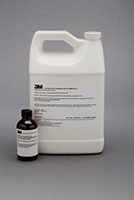
3M™ Surface Pre-Treatment AC-131 is a high-performance, non-chromated, conversion coating for applications on aluminum, nickel, and titanium alloys. The 3M™ AC-131 Pre-Treatment application is used for parts subsequently finished with epoxy-based and polyurethane-based organic coatings.

3M™ AC-131 Pre-Treatment provides an excellent solvent-free alternative to achieve the high performance required in aircraft paint applications. The current surface preparation technique such as Alodine® provides acceptable surfaces for coating applications. However, the alodine® process produces significant amounts of hazardous waste.
3M™ AC-131 Surface Pre-Treatment Conversion Coatings
Unit of Measure
1 

Authorized Distributor

Item Name

Description

Package Type

Include shipping calculator

Include in Freight Shipping Calculator

Type of Handling Units

Type of Packages

Brands

Induction Time

Pot Life after Mixing

Kit Designation

Storage

Note

Primer Type

Lap Shear Strength After 40 Days Aging at -55 Degree Fahrenheit (ºF) (-67 Degree Celsius (ºC)) Temperature

Color

Features

Hardness

Applications

Mix Ratio

Work Time

Appearance

Density

Processing

Note for Typical Properties

Tensile Strength

Test Method for Hardness

Viscosity at 77 Degree Fahrenheit (ºF) (25 Degree Celsius (ºC)) Temperature

Note for Mix Ratio

Test Method for Density

Packaging

Mix Ratio by Volume (Part A/Part B)

Mix Ratio by Weight (Part A/Part B)

Test Method for Tensile Strength

Original Equipment Manufacturer (OEM) Specifications

Consistency at 77 Degree Fahrenheit (ºF) Temperature

Gel Time at 77 Degree Fahrenheit (ºF) Temperature

Mix Ratio by Weight (R:H)

Suggested Cure Schedule Fahrenheit (ºF)

Maximum Service Temperature

Compressive Strength at 77 Fahrenheit (ºF)

Flame Retardant

Mix Ratio Ritt by Weight

Mixed Viscosity at 77 Fahrenheit (ºF) Temperature

Minimum Gel Time/Pot Life at 77 Fahrenheit (ºF) Temperature

Lap Shear Strength at 180 Fahrenheit (ºF) Temperature (Aluminum to Aluminum)

T-Peel Strength

Lap Shear Strength at 77 Fahrenheit (ºF) Temperature (Aluminum to Aluminum)

Test Method for Appearance

Test Method for Viscosity at 25 Degree Celsius (ºC) Temperature

Viscosity at 25 Degree Celsius (ºC) Temperature

Gel Time 125 Gram (g) at 77 Degree Fahrenheit (ºF) (25 Degree Celsius (ºC)) Temperature

Typical Cure Cycles

Note for Typical Physical Properties

Tensile Modulus

Test Method for Tensile Modulus

Elongation at Tensile Break

Test Method for Elongation at Tensile Break

Compressive Strength at 77 Degree Fahrenheit (ºF) (25 Degree Celsius (ºC)) Temperature

Compressive Strength at 250 Degree Fahrenheit (ºF) (121 Degree Celsius (ºC)) Temperature

Compressive Strength at 250 Degree Fahrenheit (ºF) (121 Degree Celsius (ºC)) after 7 days at 160 Degree Fahrenheit (ºF) (71 Degree Celsius (ºC)) and 85% Relative Humidity (RH)

Test Method for T-Peel Strength

Glass Transition Temperature, Tg, (E' Onset) Cured 5 days at 77 Degree Fahrenheit (ºF) (25 Degree Celsius (ºC)) Temperature

Glass Transition Temperature, Tg, (E' Onset) Cured 1 Hour at 150 Degree Fahrenheit (ºF) (66 Degree Celsius (ºC)) Temperature

Test Method for Tensile Lap Shear Strength

Tensile Lap Shear Strength for Etched and Primed Aluminum Tested at -94 Degree Fahrenheit (ºF) (-70 Degree Celsius (ºC)) Temperature

Tensile Lap Shear Strength for Etched and Primed Aluminum Tested at 77 Degree Fahrenheit (ºF) (25 Degree Celsius (ºC)) Temperature

Tensile Lap Shear Strength for Etched and Primed Aluminum Tested at 250 Degree Fahrenheit (ºF) (121 Degree Celsius (ºC)) Temperature

Tensile Lap Shear Strength for Etched and Primed Aluminum Tested at 350 Degree Fahrenheit (ºF) (177 Degree Celsius (ºC)) Temperature

Tensile Lap Shear Strength for Etched and Primed Aluminum Tested at 400 Degree Fahrenheit (ºF) (204 Degree Celsius (ºC)) Temperature

Tensile Lap Shear Strength for Carbon Fiber Reinforced Polymer (CFRP) Tested at 77 Degree Fahrenheit (ºF) (25 Degree Celsius (ºC)) Temperature

Tensile Shear Strength at 73 Degree Fahrenheit (ºF) (23 Degree Celsius (ºC)) Temperature for 4 Hour Cure Time (Aluminum to Aluminum)

Tensile Shear Strength at 73 Degree Fahrenheit (ºF) (23 Degree Celsius (ºC)) Temperature for 5 Hour Cure Time (Aluminum to Aluminum)

Tensile Shear Strength at 73 Degree Fahrenheit (ºF) (23 Degree Celsius (ºC)) Temperature for 6.5 Hour Cure Time (Aluminum to Aluminum)

Tensile Shear Strength at 73 Degree Fahrenheit (ºF) (23 Degree Celsius (ºC)) Temperature for 15 Hour Cure Time (Aluminum to Aluminum)

Tensile Shear Strength at 73 Degree Fahrenheit (ºF) (23 Degree Celsius (ºC)) Temperature for 24 Hour Cure Time (Aluminum to Aluminum)

Tensile Shear Strength at 73 Degree Fahrenheit (ºF) (23 Degree Celsius (ºC)) Temperature for 120 Hour Cure Time (Aluminum to Aluminum)

Tensile Shear Strength at 73 Degree Fahrenheit (ºF) (23 Degree Celsius (ºC)) Temperature for 168 Hour Cure Time (Aluminum to Aluminum)

Note for Cure Time

Precautionary Statement

Tensile Lap Shear Strength After 7 Days for Etched and Primed Aluminum Tested at 160 Degree Fahrenheit (ºF) (71 Degree Celsius (ºC)) Temperature and 85 % Relative Humidity (RH)

Tensile Lap Shear Strength for Anodized and Primed Aluminum (Fluid Resistance) Cure for 7 Days Tested at 77 Degree Fahrenheit (ºF) (25 Degree Celsius (ºC)) Temperature

Tensile Lap Shear Strength After 7 Days for in Water Anodized and Primed Aluminum (Fluid Resistance) Tested at 77 Degree Fahrenheit (ºF) (25 Degree Celsius (ºC)) Temperature

Tensile Lap Shear Strength After 7 Days in IPA for Anodized and Primed Aluminum (Fluid Resistance) Tested at 77 Degree Fahrenheit (ºF) (25 Degree Celsius (ºC)) Temperature

Tensile Lap Shear Strength After 7 Days n Hydraulic Fluid for Anodized and Primed Aluminum (Fluid Resistance) Tested at 77 Degree Fahrenheit (ºF) (25 Degree Celsius (ºC)) Temperature

Tensile Lap Shear Strength After 7 Days in Jet A for Anodized and Primed Aluminum (Fluid Resistance) Tested at 77 Degree Fahrenheit (ºF) (25 Degree Celsius (ºC)) Temperature

Appearance - Test Method Visual

Wet Density - Test Method ASTM D1875

Viscosity at 77°F (25°C) - Test Method ASTM D2196

Extrusion rate at 77°F (25°C) after 8 hours - Test Method OEM

Sag resistance - Test Method OEM

Cure cycle

Cured Density - Test Method ASTM D1622

Compressive strength at 73°F (23°C) - Test Method ASTM D695

Compressive strength at 300°F (149°C) - Test Method ASTM D695

Compressive strength at 350°F (177°C) - Test Method ASTM D695

Compressive strength at 73°F (23°C) after hot/wet exposure - Test Method ASTM D695

Compressive strength at 265°F (129°C) after hot/wet exposure - Test Method ASTM D695

Tensile lap shear strength, Al/Al, at 73°F (23°C) - Test Method ASTM D1002

Self-extinguishing time - 15-second horizontal burn - Test Method FAR 25.853

Self-extinguishing time - 12-second vertical burn - Test Method FAR 25.853

Tg, TMA, cured 1hour at 350°F (177°C) - Test Method ASTM E1824

Tg, DMA, cured 1hour at 350°F (177°C) - Test Method ASTM D4065

CTE, below Tg, cured 1hour at 350°F (177°C) - Test Method ASTM E831

Hot/wet exposure note

First Aid

Appearance - 1619-1 A Resin - Test Method Visual

Appearance - 1619-1 B Hardener - Test Method Visual

Appearance - Mixed System - Test Method Visual

Density - 1619-1 A Resin - Test Method ASTM D1622

Density - 1619-1 B Hardener - Test Method ASTM D1622

Density - Mixed System - Test Method ASTM D1622

Viscosity - 1619-1 A Resin - Test Method ASTM D2196

Viscosity - 1619-1 B Hardener - Test Method ASTM D2196

Viscosity - Mixed System - Test Method ASTM D2196

Extrudability - 1619-1 A Resin - Test Method BMS5-28

Extrudability - 1619-1 B Hardener - Test Method BMS5-28

Extrudability - Mixed System - Test Method BMS5-28

Mix Ratio - EPOCAST® 1619-1 A Resin - Parts by weight

Mix Ratio - EPOCAST® 1619-1 B Hardener - Parts by weight

Mixing

Gel time, 62.5 g at 77°F (25°C)

Lap shear strength at 73°F (23°C), Al-Al - Test Method ASTM D1002

Compressive strength at 180°F (82°C) - Test Method ASTM D695

Compressive modulus at 73°F (23°C) - Test Method ASTM D695

Flammability, 12-second vertical burn - Result - Test Method BMS5-28

Flammability - Extinguishing time - Test Method BMS5-28

Flammability - Burn length - Test Method BMS5-28

Flammability - Drip extinguishing time - Test Method BMS5-28

Weight gain - Mil-S-3136, Type III test fluid - Test Method ASTM D543

Weight gain - Mil-H-5606 hydraulic fluid - Test Method ASTM D543

Weight gain - Skydrol 500A - Test Method ASTM D543

Weight gain - Distilled water - Test Method ASTM D543

Hardness, Shore D - Test Method ASTM D2240

Insert pull out strength - Test Method BMS5-28

Insert torque out strength - Test Method BMS5-28

Density at 25°C - Test Method ASTM D1622

Flow - Test Method BMS 5-28, RMS 027, SMS 116201

Extrudability at 25°C - Test Method BMS 5-28, RMS 027, SMS 116201

Work life after thaw, 100 g at 25°C

Cure note

Ultimate compressive strength at 25°C - Test Method ASTM D695

Ultimate compressive strength at 177°C - Test Method ASTM D695

Ultimate tensile strength - Test Method ASTM D638

Young’s modulus - Test Method ASTM D638

Shear modulus - Test Method ASTM D5279

Flexural modulus - Test Method ASTM D790

Lap shear strength, Al-Al - Test Method ASTM D1002

Tg, onset by TMA (expansion probe) - Test Method ASTM E1363

Coefficient of Thermal Expansion - Above Tg - Test Method ASTM E831

Coefficient of Thermal Expansion - Below Tg - Test Method ASTM E831

Fluid weight gain - DI water - Test Method ASTM D543

Fluid weight gain - Skydrol 500B - Test Method ASTM D543

Fluid weight gain - MIL-H-5606 hydraulic - Test Method ASTM D543

Fluid weight gain - ASTM D471 ref. fuel - Test Method ASTM D543

Flammability, horizontal or vertical - Test Method BSS 7230

Appearance - 1648 A - Test Method Visual

Appearance - 1648 B - Test Method Visual

Appearance - 1648 A/B - Test Method Visual

Density - 1648 A - Test Method ASTM D1875

Density - 1648 B - Test Method ASTM D1875

Density - 1648 A/B - Test Method ASTM D1875

Viscosity - 1648 A - Test Method ASTM D2196

Viscosity - 1648 B - Test Method ASTM D2196

Viscosity - 1648 A/B - Test Method ASTM D2196

Gel time - 1648 A - Test Method ASTM D2471

Gel time - 1648 B - Test Method ASTM D2471

Gel time - 1648 A/B - Test Method ASTM D2471

Extrusion rate at 10 min - 1648 A - Test Method OEM

Extrusion rate at 10 min - 1648 B - Test Method OEM

Extrusion rate at 10 min - 1648 A/B - Test Method OEM

Slump - 1648 A - Test Method ASTM D2202

Slump - 1648 B - Test Method ASTM D2202

Slump - 1648 A/B - Test Method ASTM D2202

Mix Ratio - Epocast® 1648 A - Parts by weight

Mix Ratio - Epocast® 1648 B - Parts by weight

Gel time, 60g at 77°F (25ºC)

Compressive strength after hot/wet exposure at 73°F (23°C) - Test Method ASTM D695

Compressive modulus after hot/wet exposure at 73°F (23°C) - Test Method ASTM D695

Tensile lap shear strength at 73°F (23°C), Al-Al - Test Method ASTM D1002

Tensile lap shear strength after hot/wet exposure at 73°F (23°C), Al-Al - Test Method ASTM D1002

Insert pull-out strength - Test Method OEM

Insert torque strength - Test Method OEM

Self-extinguishing time (12s vertical) - Test Method FAR 25.853

Smoke density at 4 minutes - Test Method FAR 25 Appendix F V(b)

Decomposition byproducts - HCN - Test Method ABD0031 / AITM 3-0005

Decomposition byproducts - CO - Test Method ABD0031 / AITM 3-0005

Decomposition byproducts - NOx - Test Method ABD0031 / AITM 3-0005

Decomposition byproducts - SO2 - Test Method ABD0031 / AITM 3-0005

Decomposition byproducts - HF - Test Method ABD0031 / AITM 3-0005

Decomposition byproducts - HCl - Test Method ABD0031 / AITM 3-0005

Hot / Wet exposure note

Effect of Mix Ratio on Flammability - Extinguish Time - 15 wt% less 1648B

Effect of Mix Ratio on Flammability - Extinguish Time - Recommended 100:20 ratio

Effect of Mix Ratio on Flammability - Extinguish Time - 15 wt% more 1648B

Effect of Mix Ratio on Flammability - Burn Length - 15 wt% less 1648B

Effect of Mix Ratio on Flammability - Burn Length - Recommended 100:20 ratio

Effect of Mix Ratio on Flammability - Burn Length - 15 wt% more 1648B

Effect of Mix Ratio on Flammability - Drip Extinguishing Time - 15 wt% less 1648B

Effect of Mix Ratio on Flammability - Drip Extinguishing Time - Recommended 100:20 ratio

Effect of Mix Ratio on Flammability - Drip Extinguishing Time - 15 wt% more 1648B

Appearance - EPIBOND® 115 A Resin

Appearance - EPIBOND® 115 B Hardener

Appearance - Mixed Adhesive

Appearance - Test Method

Density - EPIBOND® 115 A Resin

Density - EPIBOND® 115 B Hardener

Density - Mixed Adhesive

Density - Test Method

Viscosity at 77°F (25°C) - EPIBOND® 115 A Resin

Viscosity at 77°F (25°C) - EPIBOND® 115 B Hardener

Viscosity at 77°F (25°C) - Mixed Adhesive

Viscosity - Test Method

Pretreatment

Working time

Mix Ratio - EPIBOND® 115 A Resin - Parts by weight

Mix Ratio - EPIBOND® 115 A Resin - Parts by volume

Mix Ratio - EPIBOND® 115 B Hardener - Parts by weight

Mix Ratio - EPIBOND® 115 B Hardener - Parts by volume

Gel time, 100 g, @ 77°F, >

Typical Cure Cycle

Tensile lap shear strength at 77°F (25°C)

Tensile lap shear strength at 200°F (93°C)

Tensile lap shear strength at 350°F (177°C)

Tensile lap shear strength at -85°F (-65°C)

Tensile lap shear strength - Test Method

T-Peel strength

T-Peel strength - Test Method

Tg by DMA Dry Tg as cured

Wet Tg after 42-day at 145°F at 85% RH

Tg - Test Method

Tensile Strength at 77°F (25°C)

Tensile Strength - Test Method

Flexural Strength at 77°F (25°C)

Flexural Strength - Test Method

Compressive Strength at 77°F (25°C)

Compressive Strength - Test Method

Handling strength - 16 hours at RT

Handling strength - 1 hour at 155°F

Handling strength - 1 hour at 155°F + 5 hours at 200°F

Bondline Thickness Control - 0.010 inches

Bondline Thickness Control - 0.020 inches

Bondline Thickness Control - 0.040 inches

Bondline Thickness Control - 0.080 inches

Appearance - 1210 A-1 Resin - Test Method Visual

Appearance - 1210 B Hardener - Test Method Visual

Density - 1210 A-1 Resin - Test Method ASTM D792

Density - 1210 B Hardener - Test Method ASTM D792

Density - Mixed System - Test Method ASTM D792

Viscosity - 1210 A-1 Resin - Test Method ASTM D2393

Viscosity - 1210 B Hardener - Test Method ASTM D2393

Viscosity - Mixed System - Test Method ASTM D2393

Flash point, COC - 1210 A-1 Resin - Test Method ASTM D92

Flash point, COC - 1210 B Hardener - Test Method ASTM D92

Flash point, COC - Mixed System - Test Method ASTM D92

Solids - Mixed System - Test Method ASTM D1644

Mix Ratio - EPIBOND® 1210 A-1 Resin - Parts by weight

Mix Ratio - EPIBOND® 1210 B Hardener - Parts by weight

Work life, 100 g at 25°C

Maximum service temperature - Test Method ASTM D648

Tensile lap shear - Al-Al at 25°C - Test Method ASTM D1002

Tensile lap shear - steel to steel at 25°C - Test Method ASTM D1002

Tensile lap shear - steel to steel at 66°C - Test Method ASTM D1002

Tensile lap shear - polyester to polyester at 25°C - Test Method ASTM D1002

Fluid Immersion - JP-4 - Test Method ASTM D1002

Fluid Immersion - Skydrol - Test Method ASTM D1002

Fluid Immersion - Distilled water - Test Method ASTM D1002

CTE - a1

CTE - a2

Thermal Conductivity

Outgassing - TML - Test Method ASTM E595

Outgassing - CVCM - Test Method ASTM E595

Appearance - 9615 A Hardener - Test Method Visual

Density - 9615 A Hardener - Test Method ASTM D792

Viscosity - 9615 A Hardener - Test Method ASTM D2393

Flash point, COC - 9615 A Hardener - Test Method ASTM D92

Mix Ratio - Hardener 9615 A - Parts by weight

Work life, 100g at 25°C

Tensile lap shear - Al-Al at 25°C (cured 25°C / 2 days) - Test Method ASTM D1002

Tensile lap shear - Al-Al at 25°C (cured 25°C / 2h + 121°C / 30min) - Test Method ASTM D1002

Tensile lap shear - Al-Al at 150°C (302°F) - Test Method ASTM D1002

CTE - Above transition - Test Method Huntsman

CTE - Below transition - Test Method Huntsman

Thermal Conductivity - Test Method C-Therm TCi

Heat Capacity - Test Method C-Therm TCi

Appearance - Hardener 9861 - Test Method Visual

Density - Hardener 9861 - Test Method ASTM D792

Viscosity - 1210 A-1 Resin - Test Method ASTM D2196

Viscosity - Hardener 9861 - Test Method ASTM D2196

Mix Ratio - Hardener 9861 - Parts by weight

Gel Time, 100g at 77°F (25°C)

Lap shear strength, Al-Al - 77°F (25°C) - Test Method ASTM D1002

Lap shear strength, Al-Al - 200°F (93°C) - Test Method ASTM D1002

Lap shear strength, Al-Al - 300°F (149°C) - Test Method ASTM D1002

Tg (DMA) - E’ Onset - Test Method Huntsman

Tg (DMA) - Tand peak - Test Method Huntsman

CTE - a1 Below transition - Test Method Huntsman

CTE - a2 Above transition - Test Method Huntsman

Tensile Strength - Test Method ASTM D638

Tensile Modulus - Test Method ASTM D638

Tensile Elongation - Test Method ASTM D638

Flexural Strength - Test Method ASTM D790

Lap Shear after fluid immersion - JP-4 - Test Method ASTM D1002

Lap Shear after fluid immersion - Skydrol - Test Method ASTM D1002

Lap Shear after fluid immersion - Distilled water - Test Method ASTM D1002

Mix ratio - Per Weight

Mix ratio - Per Volume

Mixing color indicator - Resin (A)

Mixing color indicator - Hardener (B)

Mixing color indicator - Mixed

Recommended Cure Schedules

Working time at 77°F (25°C)

Gel time at 77°F (25°C)

Tensile lap shear strength - Aluminum 2024*, Cured 150°F (66°C) for 2 hours; Test Temp 77°F (25°C) - Test Method ASTM D1002

Thick Adherend Lap Shear Strength - Cured 7 days at 77°F (25°C); Test Temp 77°F (25°C) - Test Method ASTM 5656

T-Peel Strength - Cured 200°F (93°C) / 2 hours; Test Temp 77°F (25°C) - Test Method ASTM D3167

Compressive Strength, ultimate - Cured 200°F (93°C) / 2 hours; Test Temp 77°F (25°C) - Test Method ASTM D695

Compressive Modulus - Cured 200°F (93°C) / 2 hours; Test Temp 77°F (25°C) - Test Method ASTM D695

Hardness - Cured 7 days at 77°F (25°C); Test Temp 77°F (25°C) - Test Method ASTM D2240

Resistivity - 10 Volts; Test Temp 77°F (25°C)

Glass transition temperature, Tg - Cured 1 hour at 300°F (121°C); DMA E’ onset

Outgassing - TML - Cured 7 days at 77°F (25°C) - Test Method ASTM E595

Outgassing - CVCM - Cured 7 days at 77°F (25°C) - Test Method ASTM E595

AC-131 BB N/A 3M™ AC-131 2-Part Blue Color Surface Pre-Treatment Conversion Coating N/A 3M™ Surface Pre-Treatment AC-131 is a high-performance, non-chromated, conversion coating for applications on aluminum, nickel, and titanium alloys. The 3M™ AC-131 Pre-Treatment application is used for parts subsequently finished with epoxy-based and polyurethane-based organic coatings.

3M™ AC-131 Pre-Treatment provides an excellent solvent-free alternative to achieve the high performance required in aircraft paint applications. The current surface preparation technique such as Alodine® provides acceptable surfaces for coating applications. However, the alodine® process produces significant amounts of hazardous waste.
N/A Each N/A N/A N/A N/A N/A 3M™ N/A 30 minutes N/A 24 hour N/A 100 mL50 mLPint Quart 1 gal5 gal N/A For BMS10-128 and AMS3175, the shelf life of 3M™ Surface Pre-Treatment AC-131 BB and CB is 12 months from the date of package when stored in the original unopened containers between 40 ºF and 100 ºF. N/A These products were manufactured under a 3M™ Quality Management System registered to the AS9100 standard. N/A N/A N/A Blue N/A N/A N/A N/A N/A N/A N/A N/A N/A N/A N/A N/A N/A N/A N/A N/A N/A N/A N/A N/A N/A N/A N/A N/A N/A N/A N/A N/A N/A N/A N/A N/A N/A N/A N/A N/A N/A N/A N/A N/A N/A N/A N/A N/A N/A N/A N/A N/A N/A N/A N/A N/A N/A N/A N/A N/A N/A N/A N/A N/A N/A N/A N/A N/A N/A N/A N/A N/A N/A N/A N/A N/A N/A N/A N/A N/A N/A N/A N/A N/A N/A N/A N/A N/A N/A N/A N/A N/A N/A N/A N/A N/A N/A N/A N/A N/A N/A N/A N/A N/A N/A N/A N/A N/A N/A N/A N/A N/A N/A N/A N/A N/A N/A N/A N/A N/A N/A N/A N/A N/A N/A N/A N/A N/A N/A N/A N/A N/A N/A N/A N/A N/A N/A N/A N/A N/A N/A N/A N/A N/A N/A N/A N/A N/A N/A N/A N/A N/A N/A N/A N/A N/A N/A N/A N/A N/A N/A N/A N/A N/A N/A N/A N/A N/A N/A N/A N/A N/A N/A N/A N/A N/A N/A N/A N/A N/A N/A N/A N/A N/A N/A N/A N/A N/A N/A N/A N/A N/A N/A N/A N/A N/A N/A N/A N/A N/A N/A N/A N/A N/A N/A N/A N/A N/A N/A N/A N/A N/A N/A N/A N/A N/A N/A N/A N/A N/A N/A N/A N/A N/A N/A N/A N/A N/A N/A N/A N/A N/A N/A N/A N/A N/A N/A N/A N/A N/A N/A N/A N/A N/A N/A N/A N/A N/A N/A N/A N/A N/A N/A N/A N/A N/A N/A N/A N/A N/A N/A N/A N/A N/A N/A N/A N/A N/A N/A N/A N/A N/A N/A N/A N/A N/A N/A N/A N/A N/A N/A N/A N/A N/A N/A N/A N/A N/A N/A N/A N/A N/A N/A N/A N/A N/A N/A N/A N/A N/A N/A N/A N/A N/A N/A N/A N/A N/A N/A N/A N/A
AC-131 CB N/A 3M™ AC-131 2-Part Clear Color Surface Pre-Treatment Conversion Coating N/A 3M™ Surface Pre-Treatment AC-131 is a high-performance, non-chromated, conversion coating for applications on aluminum, nickel, and titanium alloys. The 3M™ AC-131 Pre-Treatment application is used for parts subsequently finished with epoxy-based and polyurethane-based organic coatings.

3M™ AC-131 Pre-Treatment provides an excellent solvent-free alternative to achieve the high performance required in aircraft paint applications. The current surface preparation technique such as Alodine® provides acceptable surfaces for coating applications. However, the alodine® process produces significant amounts of hazardous waste.
N/A Each N/A N/A N/A N/A N/A 3M™ N/A 30 minutes N/A 24 hour N/A 100 mL50 mLPint Quart 1 gal5 gal N/A For BMS10-128 and AMS3175, the shelf life of 3M™ Surface Pre-Treatment AC-131 BB and CB is 12 months from the date of package when stored in the original unopened containers between 40 ºF and 100 ºF. N/A These products were manufactured under a 3M™ Quality Management System registered to the AS9100 standard. N/A N/A N/A Clear N/A N/A N/A N/A N/A N/A N/A N/A N/A N/A N/A N/A N/A N/A N/A N/A N/A N/A N/A N/A N/A N/A N/A N/A N/A N/A N/A N/A N/A N/A N/A N/A N/A N/A N/A N/A N/A N/A N/A N/A N/A N/A N/A N/A N/A N/A N/A N/A N/A N/A N/A N/A N/A N/A N/A N/A N/A N/A N/A N/A N/A N/A N/A N/A N/A N/A N/A N/A N/A N/A N/A N/A N/A N/A N/A N/A N/A N/A N/A N/A N/A N/A N/A N/A N/A N/A N/A N/A N/A N/A N/A N/A N/A N/A N/A N/A N/A N/A N/A N/A N/A N/A N/A N/A N/A N/A N/A N/A N/A N/A N/A N/A N/A N/A N/A N/A N/A N/A N/A N/A N/A N/A N/A N/A N/A N/A N/A N/A N/A N/A N/A N/A N/A N/A N/A N/A N/A N/A N/A N/A N/A N/A N/A N/A N/A N/A N/A N/A N/A N/A N/A N/A N/A N/A N/A N/A N/A N/A N/A N/A N/A N/A N/A N/A N/A N/A N/A N/A N/A N/A N/A N/A N/A N/A N/A N/A N/A N/A N/A N/A N/A N/A N/A N/A N/A N/A N/A N/A N/A N/A N/A N/A N/A N/A N/A N/A N/A N/A N/A N/A N/A N/A N/A N/A N/A N/A N/A N/A N/A N/A N/A N/A N/A N/A N/A N/A N/A N/A N/A N/A N/A N/A N/A N/A N/A N/A N/A N/A N/A N/A N/A N/A N/A N/A N/A N/A N/A N/A N/A N/A N/A N/A N/A N/A N/A N/A N/A N/A N/A N/A N/A N/A N/A N/A N/A N/A N/A N/A N/A N/A N/A N/A N/A N/A N/A N/A N/A N/A N/A N/A N/A N/A N/A N/A N/A N/A N/A N/A N/A N/A N/A N/A N/A N/A N/A N/A N/A N/A N/A N/A N/A N/A N/A N/A N/A N/A N/A N/A N/A N/A N/A N/A N/A N/A N/A N/A N/A
Unit of Measure
1